

Stop Paying for Software That Makes You Do the Work
Business Partner · 14 October 2026 · 5 min read
Count the business apps you pay for each month. Accounting, invoicing, banking, a CRM, a task list, a calendar and probably a dashboard that brings some of them together. Each one was bought to save time.
Yet many owners end the week with more tabs open, more alerts to clear and less sense of control than before they signed up. The tools are working exactly as designed. The design is the problem.
Now ask a harder question. How many of them actually do work, and how many simply give you more to look at? A surprising amount of business software is a monthly subscription to more checking.
The dashboard is not the work
Dashboards look like progress. The charts are clean, the numbers update and there is a reassuring sense that everything is visible. Opening one feels responsible.
But a dashboard does not chase the overdue customer. It does not decide whether the supplier query matters, and it does not draft the reply. It shows you a number and leaves the rest to you.
That is fine when you have a finance team to interpret it. In an owner-led business, the person reading the dashboard is usually the same person who has to act on it, remember it and follow it up.
Visibility is useful. But visibility you have to process yourself is just another job.
Reminders that remind you of work you still have to do
The reminder is the dashboard's noisier cousin. It pings when an invoice is overdue, when a task is due and when something has changed. Each alert is accurate, and each one hands the work straight back to you.
You still have to open the record, work out the history, decide what to say and write the message. The software has done the easy part, noticing, and left you the hard part, which is everything after that.
Multiply that across several apps and the day fills with prompts. The owner becomes a switchboard, routing alerts from one system to another and carrying the context in their head.
Worse, the alerts train you to react. Whatever pinged most recently gets handled first, whether or not it matters most.
A reminder that only tells you what to worry about has not saved you any time.
Count what you are really paying
Say your software costs R2,500 a month. That number is easy to see, because it arrives on a statement. The bigger cost is the time it takes to use.
Say you value your hour at R1,500 and spend an hour a day checking, reconciling and responding to what the tools surface. Over twenty working days, that is R30,000 of your time on top of the subscription. These figures are illustrations, not research, but the shape of the sum holds for most owners who try it.
The subscription is the cheap part. The expensive part is that the software assumed your attention was free.
It also explains why adding another app so rarely helps. Each new tool brings its own screen, its own alerts and its own habit of checking.
The real price of a tool is what it costs plus what it asks of you.
The difference between showing and preparing
There is a better standard to hold software to. Showing tells you something happened. Preparing takes the next step as far as it responsibly can, and then hands it to you to decide.
Picture the difference with an overdue invoice. One tool flags it in red. Another brings it forward with the customer's payment history, what was last agreed and a follow-up message ready to approve or change.
Both are accurate. Only one has done any work. And notice that preparing does not mean acting without you; the owner still approves what goes out, but no longer starts from a blank page.
Good software does not ask what you want to look at. It asks what you need to decide.
Ask harder questions before you buy
Most software is sold on features: how many reports, how many integrations, how many ways to see your data. Those are the wrong questions for an owner who is already short of attention.
Better questions are simpler. After using this tool, will I have less to check or more? Does it prepare a next step, or just raise a flag? Does it remember the context, or do I have to bring it every time?
If the honest answer is more checking, more flags and more remembering, the tool is not working for you. You are working for it, and paying for the privilege.
Judge every tool by the work it removes, not the information it adds.
Software that prepares the next step
Business Partner is built on that principle. Each morning, the Morning Brief brings forward the matters that genuinely need you and prepares the next step, such as a follow-up ready for your approval. Nothing goes out unless you decide it should.
When you need an answer, Ask works from your own business evidence, so you get a reasoned response rather than another screen to interpret. Memory keeps the understanding of your business, the agreements, history and context, so the next step arrives with what you need to judge it.
It will not replace your judgement, and it is not meant to. It is meant to stop your judgement being spent on assembling the picture, so it can be spent on the decision.
Stop paying for software that hands you more work. Pay for software that hands you the next step.
See your own Morning Brief
Send the aged debtors report your accounting system already produces and see who to chase first.
Try it with your reportKeep reading

The Most Expensive Employee in Your Business Is You
Every owner knows what their staff cost by the hour. Very few have priced their own hour, or noticed how much of it goes on work worth a fraction of that.
Your Business Has Cash Hiding in Plain Sight
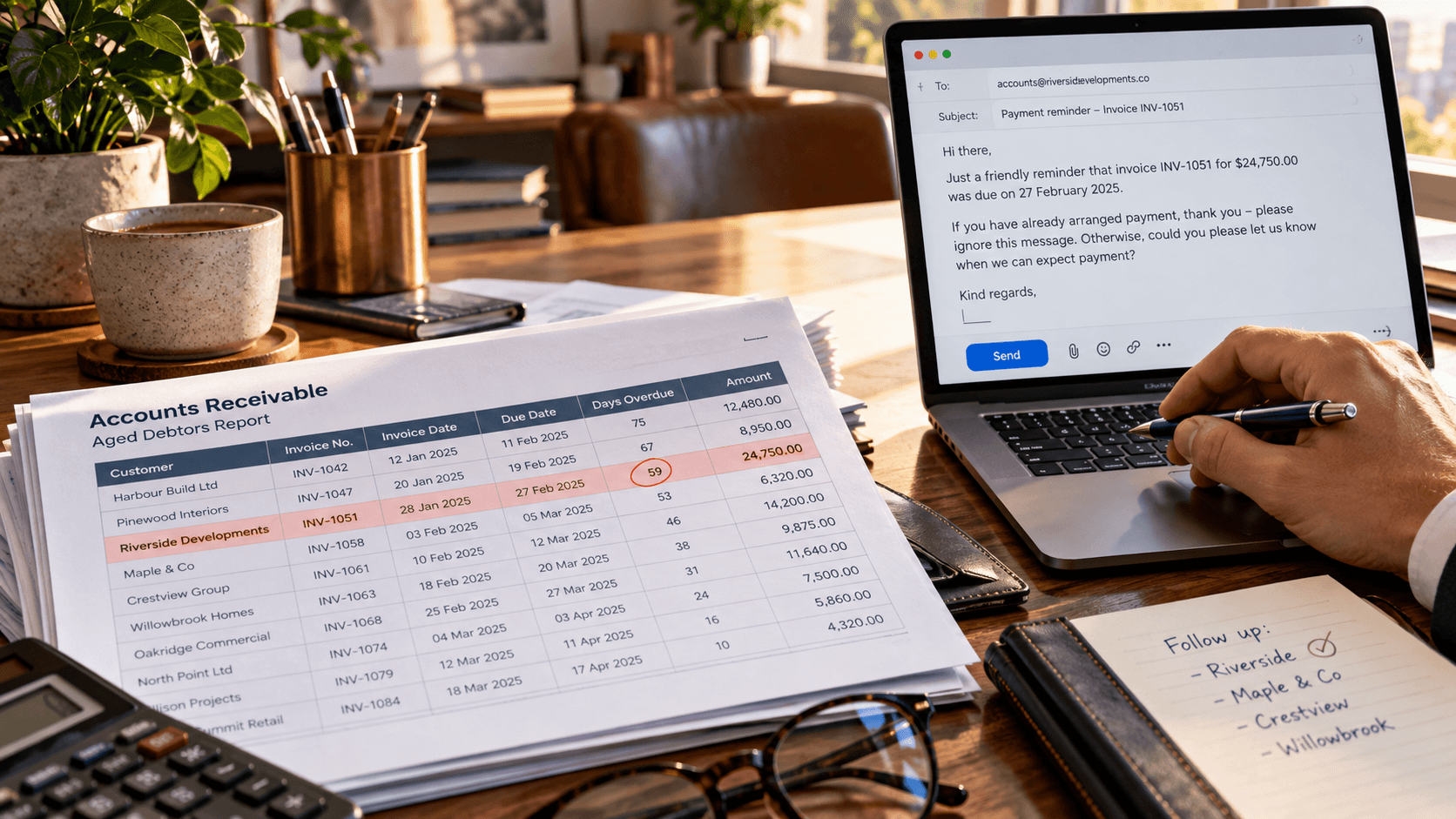
The money most owners are looking for is already earned. It is sitting in an aged debtors report, waiting for a follow-up nobody had time to send.
Every Business Owner Needs a Thinking Partner
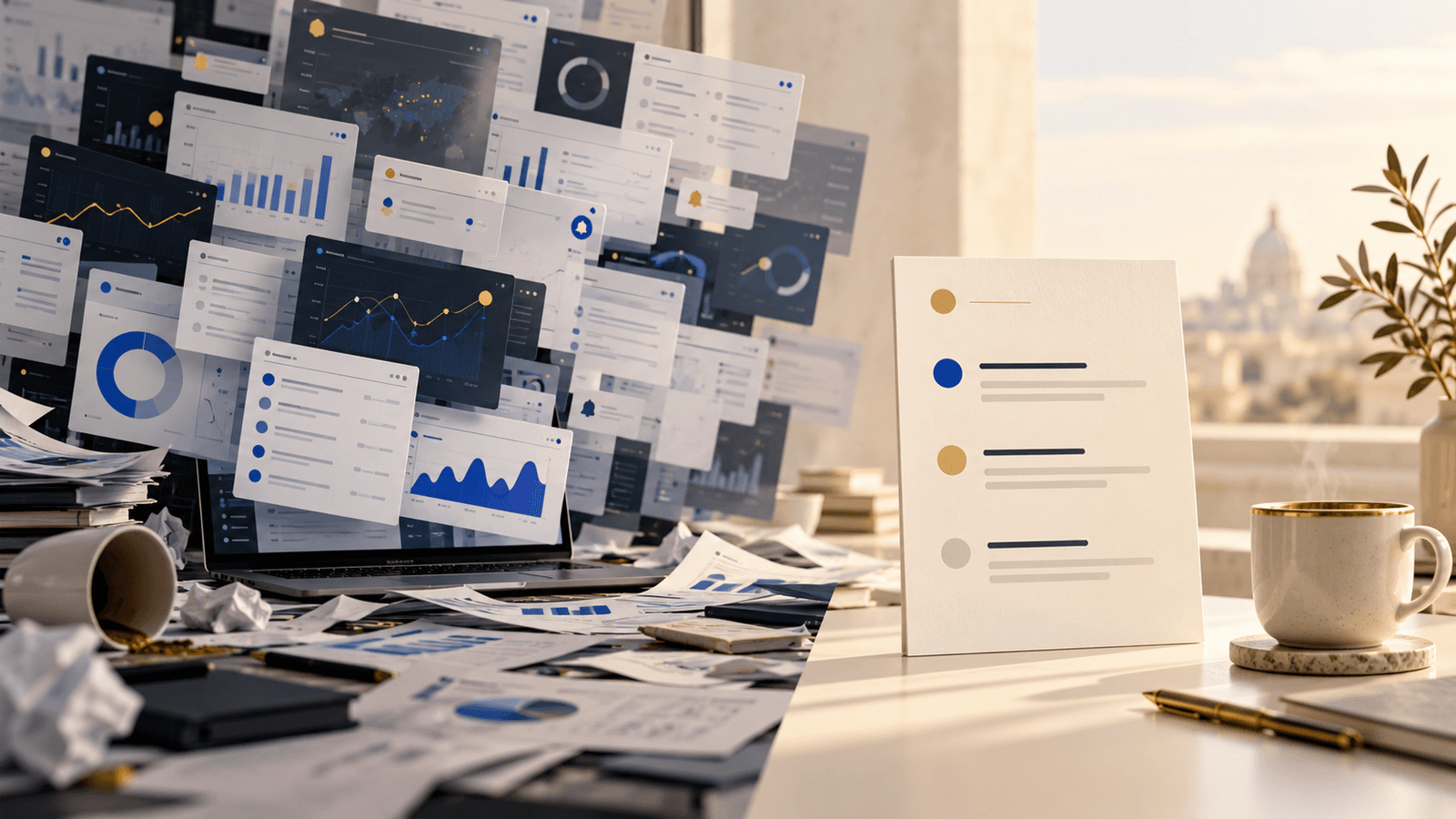
More information does not solve the shortage of attention. Better judgement about what matters might.